Home / Collection / Roller Blinds
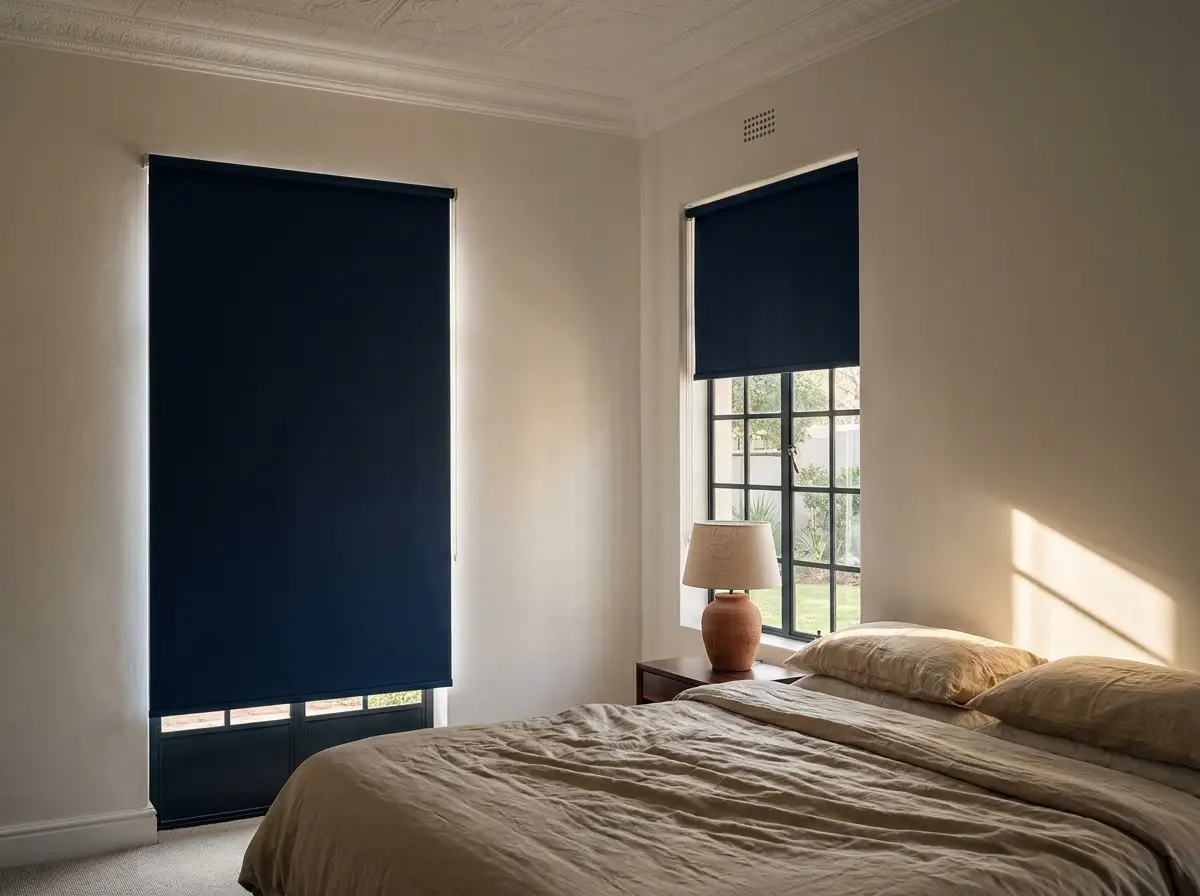
Brooklyn does not have one kind of window. Walk two blocks off the café strip and you pass a face-brick house with tall timber sash windows set back behind a deep veranda, then a split-level with steel casements, then a glass-heavy addition bolted onto the back of either one. A roller is one of the few blinds that handles all three without looking like a compromise — but it wants a different specification each time, and working out which is most of what happens at the measure.
Fabric first. Colour is the easy part.
Almost everything about how a roller behaves is decided by the cloth on the tube. Settle that and the colour choice takes ten minutes.
Blockout is a coated fabric with no light path through it at all, and it carries a real thermal benefit in both directions — heat out in January, warmth in on a cold Pretoria morning in July. It earns its place in bedrooms, nurseries and any room with a screen in it. Summer here gets properly light before five, and that is when people notice the difference.
Sunscreen is a woven mesh, and the number attached to it — the openness — is simply how much of that weave is hole rather than yarn. A 3% mesh is tightly woven, a 10% mesh is loose. Tighter means less glare, less heat and more daytime privacy. Looser means a crisper view and a brighter room. West-facing glass in Brooklyn takes the full afternoon load from about two o'clock and is usually a 3% or 5% job; a shaded east room can carry 10% happily.
Here is the part that catches most people out. A dark mesh gives you the better view out; a pale mesh gives you the brighter room. Charcoal absorbs the glare instead of scattering it, so the garden reads clearly through the weave. White and pearl bounce light back at you and wash the view out. So the usual answer is charcoal on the windows you actually look through, something paler where the blind is mostly there to soften a wall.
Light-filter fabric sits between the two: solid enough for complete privacy, translucent enough to keep a room glowing rather than dark. Bathrooms, and street-facing dining rooms where you want the light but not the passing view in.
What we check on site
The older Brooklyn houses often carry a picture rail running close above the window architrave. It decides where a bracket can physically go, and sometimes it pushes the blind inside the reveal rather than across the wall. We measure reveal depth and rail height before the quote goes out, never after.
Inside the reveal, or across the wall
An inside-mount blind sits within the window recess. It looks tidy, it leaves the architrave and the original timber on show, and on a deep old reveal it is nearly always the better-looking call. The cost is light. A roller has to clear its own brackets, so a thin gap runs down each side, and in a bedroom that gap is precisely what wakes you at half past four.
A face-fix blind mounts on the wall above the opening and overlaps the frame by roughly 60 to 100mm on either side. Less delicate on a heritage window, far better at stopping light. Where a room genuinely has to go dark we fit face-fix, and where it still matters after that, we add side channels.
How you actually operate it
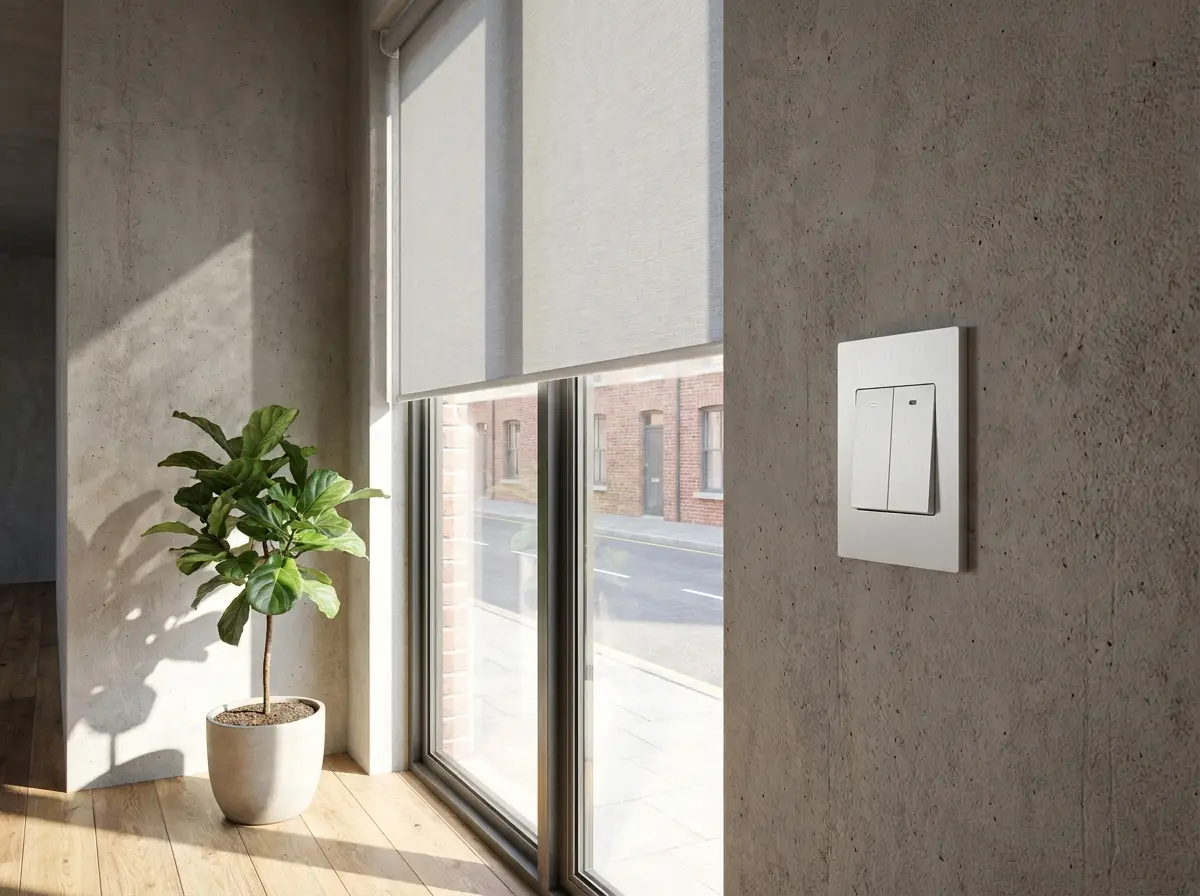
A chain is the cheapest and the most common, and every corded blind we fit gets a tensioner screwed into the wall so the loop cannot hang slack. That is standard, not an extra. A spring-assist blind does away with the chain altogether — you take hold of the bottom rail, set it where you want it, and it stays there, which suits small windows and children's rooms. Motorising starts to make sense past about two metres wide, on anything you would need a ladder to reach, and on a run of windows you would otherwise walk along one blind at a time.
When we would talk you out of one
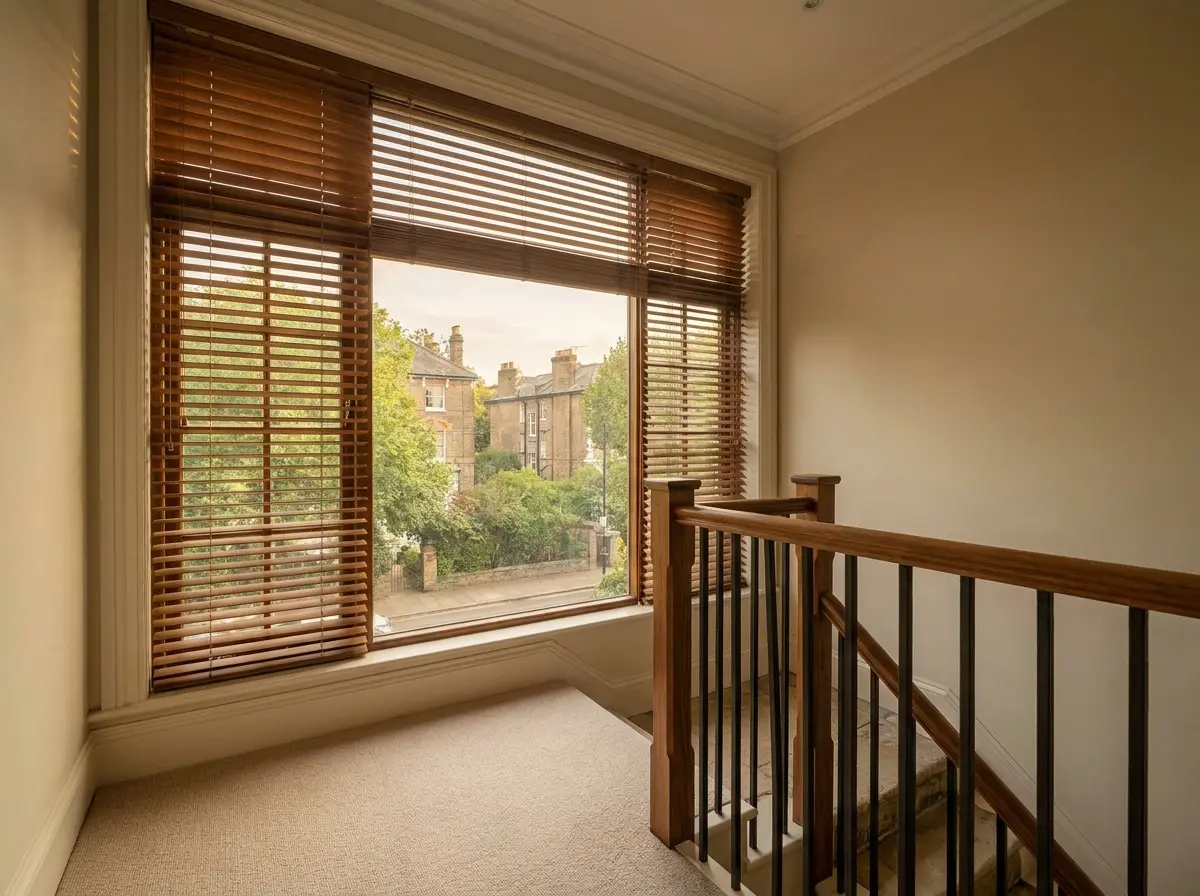
A roller is not always the right answer, and it is cheaper for everyone if we say so at the measure. On a tall sash window in an original Brooklyn front room a timber venetian usually looks better and hands you the hour-by-hour control a flat panel cannot give. On very wide unbroken glass the fabric width becomes the constraint, and the real choice is between a visible join and splitting the span into linked blinds. And in a room where the window itself is the feature, a big plain sheet of cloth can quietly flatten the thing you liked about it.
What a roller blind costs here
Read these as a guide per square metre, installed, not as a quote. A manual roller — chain or spring, in blockout, sunscreen or light-filter cloth — sits between R1,000 and R1,600 per square metre. A plain blockout in a standard colour lands near the bottom of that; a low-openness sunscreen, a double roller on one bracket, or a cassette with a colour-matched fascia pushes toward the top.
Add a motor and that blind moves to R2,500 – R3,800 the square metre, which covers the tube motor, the remote or keypad you choose and setting it up on the day. Two caveats before you reach for a calculator. A small window carries a minimum charge, because a scullery pane needs the same brackets, tube and half-hour on a ladder as a big one does. And the number that matters is the one written against each opening after the free measure, which is the only point at which reveal depth, picture-rail height and fabric width stop being guesses.
Roller questions
The five we get asked on nearly every roller quote.
Can a roller go over a window that already has burglar bars?+
Yes, and it is a common fit here. The blind is face-fixed to the wall above the opening so the fabric hangs clear in front of the bars rather than fouling them. What we need to know at the measure is how far the bars stand proud of the frame, because that sets the bracket projection. Bars set into the reveal are usually no trouble at all.
How dark does a blockout roller actually make a room?+
The fabric itself passes no light. What lets light in is the gap around it — the few millimetres each side where the blind clears its brackets, and the line along the bottom rail. Face-fixed with a generous overlap you get a properly dim room. With side channels added you get close to true blackout. Fitted inside a shallow reveal, expect a soft glow at the edges.
Does a sunscreen blind keep heat out, or only glare?+
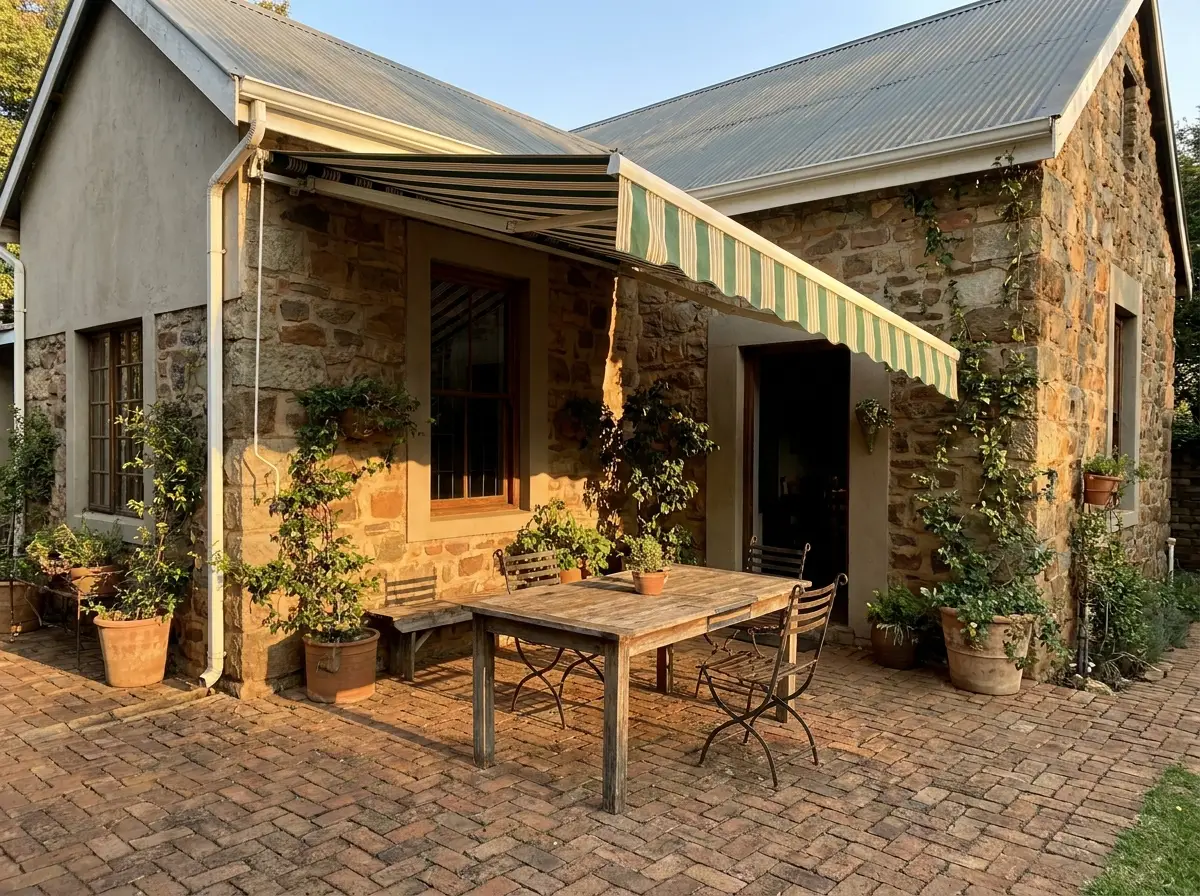
Both, but it is honest to say it does more for glare than for heat. Any blind fitted on the inside is stopping sun that has already come through the glass, so a good share of that energy is already in the room. A tight, dark mesh cuts a meaningful amount of it. If a west-facing room is genuinely cooking in February, the bigger win is shading outside the glass — external venetians or an awning — and we will tell you that rather than sell you a mesh that cannot do the job.
What happens to a motorised roller when the power goes?+
Depends how it is powered. A battery motor runs off its own rechargeable pack and does not care about the mains at all, which is why we lean toward them on most homes here and often pair one with a small solar charging strip on a sunny window. A hardwired motor will not run without power, so it is the wrong choice for a house that loses supply regularly unless you are happy to leave the blind where it stands until the power returns.
Can the blind be matched to original timber frames?+
The fabric range is wide enough that we can almost always land close to an existing timber tone, and where a cassette or pelmet is fitted the fascia can be powder-coated to a colour you choose. What we will not do is promise an exact match off a photograph. We bring samples to the house and hold them against your actual frames in your actual light, because a colour that reads warm under a veranda roof can read grey in an open room three metres away.
Related
You might also be considering
Where we fit them
Roller blinds across Brooklyn and the neighbourhoods around it
The same blockout, sunscreen and double-roller logic that works on Brooklyn's own veranda bay windows travels well down the road — low-openness sunscreen on Groenkloof's reserve-facing glass, family-room rollers for Menlo Park's back gardens, slim cassettes for Hazelwood's compact stands, and ridge-facing rollers alongside the external venetians we fit in Waterkloof.
Get a written quote for your windows.
A free in-home measure, real fabric samples, and an itemised quote — no obligation to go ahead.
Book your free measure